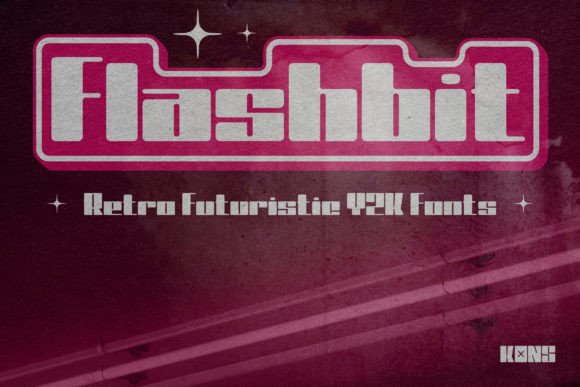
Flashbit: Your Gateway to Y2K Retro-Futurism
There’s a distinct aesthetic that’s made a massive comeback, and it’s not just about low-rise jeans or flip phones. It’s the visual language of the late 1990s and early 2000s—a time when the digital world felt new, shiny, and full of possibility. This era gave us translucent plastics, metallic gradients, and a unique blend of optimism and technology. If you’re looking to capture that specific energy for a modern project, the Flashbit premium font is your direct time machine.
Capturing the Digital Dawn
So, what exactly is Flashbit? It’s not just another display font. Think of it as a typeface that embodies the sophisticated side of Y2K design. It draws inspiration from the emerging digital graphics of the 2000s—think early web interfaces, futuristic movie posters, and the sleek, often chrome-like typography used in video game menus and tech advertising. The style is characterized by clean, geometric forms with a subtle, almost industrial edge. It avoids looking cheap or overly cartoonish, instead offering a refined take on retro-futurism. The letterforms have a balanced weight, making them feel substantial and confident without being overpowering. This isn't a script font or a handwritten font; it's a structured, modern typography piece designed for impact.
The personality of Flashbit is forward-thinking yet nostalgic. It communicates innovation, speed, and a certain cool detachment. When you use it, you’re tapping into a visual shorthand for cutting-edge (for its time) technology and a bold, optimistic future. This makes it a powerful tool for designers and creators who want to evoke that specific early-internet, tech-startup, or cyber-sport vibe without resorting to clichés.
Where Flashbit Truly Shines: Practical Applications
The real value of a creative font like this is in its application. Where does Flashbit work best? Its strengths are vast, but let's break down some concrete, real-world uses where its character can elevate a project from good to memorable.
- Logo Design & Brand Identity: For brands in tech, gaming, esports, or any field wanting to project innovation with a retro twist, Flashbit is a stellar choice. It creates instant recognition and sets a specific tone. Imagine it for a streaming platform, a podcast about digital culture, or a brand selling modern electronics with a nostalgic flair.
- Gaming Assets & Sport Design: This is a natural habitat. Use it for in-game titles, HUD elements, team jerseys, or promotional posters for tournaments. Its clean geometry ensures legibility at various sizes, while its style screams "competitive" and "digital-native."
- Packaging Design: Think about snack packaging, beverage cans, or tech accessories aimed at a younger, design-conscious audience. Flashbit can make a product jump off the shelf by signaling that it’s fun, modern, and connected to a specific cultural moment. It works exceptionally well with metallic foils, glossy finishes, and bold color palettes.
- Editorial & Web Design: While primarily a display font, it can be used for striking headlines in magazines, blog headers, or website hero sections. Pair it carefully with a clean sans serif font for body text to maintain readability. It’s perfect for articles about retro trends, tech reviews, or pop culture retrospectives.
- Social Media & Marketing Graphics: Create thumb-stopping Instagram posts, YouTube thumbnails, or event flyers. The font’s inherent style does a lot of the heavy lifting, helping your graphics stand out in a crowded feed. It’s particularly effective for announcements, product launches, and hype-building content.
Making the Font Work for You: A Practical Guide
Adopting a new typeface into your toolkit is a decision. Here’s how to approach Flashbit thoughtfully to ensure it delivers real value.
Evaluating the Fit
Before you commit, ask: Does my project’s audience and message align with retro-futurism? If your brand is all about organic, handcrafted, or classic luxury, this might not be the right serif font or sans serif font alternative. But if you’re targeting millennials or Gen Z with an interest in nostalgia, gaming, tech, or streetwear, the fit is often perfect. Look at the font’s character set—does it include the glyphs, numbers, and punctuation you need?
Testing Font Pairings
A display font rarely works alone. The key to professional typography is pairing. Flashbit’s strong personality needs a complementary partner. A simple, geometric sans serif font (like a modern Helvetica or Futura variant) often works beautifully for body copy, providing contrast without conflict. Avoid pairing it with other highly stylized fonts, like an ornate script font, as this can create visual chaos. Always test your pairings in context—at the actual size they’ll be viewed.
Considering Readability and Hierarchy
Use Flashbit strategically to build visual hierarchy. It’s ideal for headlines, subheadings, logos, and call-to-action buttons. For long-form text or small print, switch to a more neutral, highly readable typeface. The goal is to let Flashbit grab attention and set the mood, then let another font handle the detailed information. This approach ensures your design is both impactful and functional.
Understanding the Asset
As a premium font, Flashbit likely comes with multiple styles or weights (e.g., Regular, Bold, Italic). Explore these variations. A bold weight might be perfect for a poster headline, while the regular weight could work for a logo lockup. Check what’s included in your license—is it for desktop, web, or app use? Understanding the full scope of your commercial font license prevents headaches later and allows you to use the asset to its full potential across all your projects, from digital ads to printed merchandise.
In the end, Flashbit is more than just a set of letters. It’s a design asset that carries a specific cultural and aesthetic weight. Used with intention, it can instantly transport your audience, clarify your brand’s personality, and create a cohesive, engaging visual experience that feels both fresh and familiar. It’s a tool for storytellers, brand builders, and creators who know that sometimes, the best way to move forward is to take a stylish step back.