Thick Love: A Playful Display Font for Creative Brands
The Personality Behind the Typeface
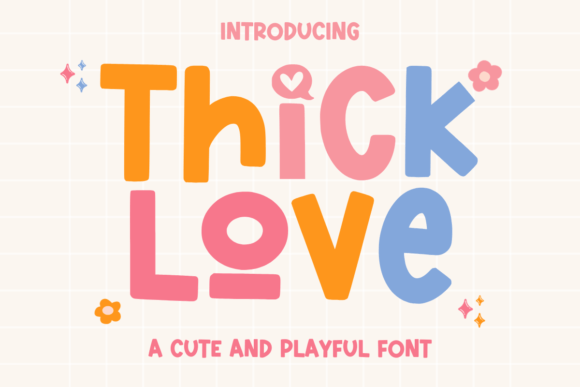
When you first encounter Thick Love, the immediate reaction is usually a smile. It isn’t just a collection of letters; it is a distinct personality captured in a digital file. As a display font, its primary job is to grab attention, and it does so with a charming, hand-drawn aesthetic that feels approachable and genuine. Unlike the rigid structure of a sans serif font or the classic elegance of a serif font, this typeface embraces a handwritten font style that mimics the natural irregularities of marker or brush strokes.
The defining characteristic of Thick Love is its weight. The strokes are bold and substantial, ensuring that it holds its ground in any layout. However, it avoids feeling heavy or oppressive because of its rounded edges and slightly imperfect baseline. It strikes a balance between the boldness needed for impact and the softness required to remain friendly. This makes it a versatile creative font that can bridge the gap between professional branding and casual, personal projects.
Practical Applications in Modern Design
Understanding where to deploy a font like Thick Love is just as important as liking how it looks. Because it is a premium font designed for high visibility, it excels in environments where short bursts of text need to convey emotion immediately. It is not a script font meant for flowing paragraphs, nor is it a workhorse for body copy. Instead, it is the centerpiece of your visual hierarchy.
Product Design and Merchandise
In the world of physical products, Thick Love is incredibly effective. Consider the scale and texture of common merchandise items. For mugs, the thick strokes ensure the design remains legible even when the viewer is holding the cup at an angle. For T-shirt designs, the boldness of the letters stands out against fabric textures, whether you are printing on cotton, polyester, or blends. It is particularly popular for sublimation and stickers because the solid weight of the letters ensures clean, crisp edges that don’t fray or disappear during the production process.
Digital Presence and Social Media
Digital platforms are noisy, and breaking through the scroll requires a strong visual voice. Thick Love works exceptionally well for social media graphics, particularly for quotes, announcements, and sale banners. The font’s inherent cuteness makes it ideal for lifestyle brands, parenting blogs, and food marketing. When used in web design, it should be reserved for hero sections or call-to-action buttons. Pairing it with a clean, geometric sans-serif for the body text creates a beautiful contrast that guides the reader's eye naturally.
Branding and Identity
For small businesses looking to build a brand identity that feels human and relatable, this typeface is a strong contender. It works well for bakeries, boutique agencies, event planners, and children’s brands. The font suggests that the brand is approachable and values creativity. However, it is crucial to evaluate if the "playful" nature aligns with your specific industry. A law firm might find it too casual, but a wedding invitation business would find it perfectly suited for logo design and packaging design.
Design Strategy: Mixing Cases and Font Pairings
One of the unique strengths of Thick Love is its flexibility with case usage. The prompt to mix uppercase and lowercase letters is a valuable design tip. A word written entirely in uppercase can sometimes feel like shouting, but mixing cases softens the tone. For example, writing "HeLLo" or "LoVe" in a layout creates a dynamic, bouncy rhythm that feels organic and hand-crafted. This stylistic choice is perfect for crafts, scrapbooking, and birthday cards where the goal is warmth rather than authority.
Creating Visual Hierarchy
Effective modern typography relies on contrast. Thick Love is a heavyweight champion, so it needs a sparring partner. If you use this for your main headline, your sub-headlines and body text should be lighter and more structured. A thin sans-serif or a classic serif font can provide the necessary breathing room. This prevents the design from becoming cluttered and ensures the viewer understands the most important information first.
Readability Considerations
While the font is bold, readability is always a priority. Because it is a handwritten font, kerning (the space between letters) is generally set to accommodate the natural flow of script. However, designers should always check their tracking, especially if they are using the font at very small sizes or for long phrases. For editorial design, keep the size large. If you are creating a logo, take the time to adjust the spacing manually to ensure the letters don't collide awkwardly, particularly with specific letter combinations like "Th" or "ov".
Evaluating Fit and Licensing
Before finalizing a design, it is wise to test the font in context. Download the trial versions if available, or create mockups to see how Thick Love interacts with your specific color palette and imagery. Does it compete with your product photos, or does it complement them?
Furthermore, for entrepreneurs and business owners, the legal aspect of design assets cannot be ignored. Ensure you are acquiring a commercial font license that covers your intended use. If you are selling products with the font embedded—like POD (Print on Demand) items or digital downloads—you need a license that permits those specific commercial applications. Checking the "included styles" is also beneficial; sometimes a font family comes with alternates or swashes that can add even more flair to your quotes and headers.
Final Verdict on Application
Ultimately, Thick Love is a tool for connection. It breaks down the barrier between the brand and the consumer by using a visual language that feels familiar and affectionate. Whether you are designing a tumbler for a friend or a marketing campaign for a national holiday, this typeface offers the weight to be seen and the personality to be remembered. It is a reliable asset for any creative professional's toolkit, provided it is used with the right complementary elements and a clear understanding of the message you wish to convey.