Worry Line: The Elegant Serif Font for Modern Creatives
There's a certain quiet confidence in simplicity. In a world saturated with loud, complex designs, a clean, intentional aesthetic often speaks the loudest. This is the philosophy behind Worry Line, a serif font that masterfully blends minimalism with character. It’s not just a typeface; it’s a design decision that signals clarity, sophistication, and modern taste.
Understanding the Visual Character of Worry Line
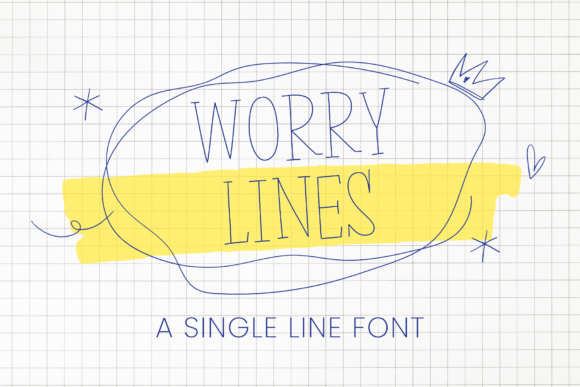
At its core, Worry Line is a single-line serif font. This means its letterforms are constructed with a consistent, fine stroke weight, giving it an incredibly neat and uncluttered appearance. The serifs—the small feet at the ends of letters—are present but understated, providing just enough structure to guide the eye without creating visual noise.
The personality of this serif font is one of refined neutrality. It doesn't shout for attention with ornate flourishes or dramatic contrasts. Instead, it earns attention through its precise geometry and balanced proportions. The "worry" in its name is ironic; its effect is the opposite, bringing a sense of calm order to any layout. It feels contemporary yet timeless, making it a versatile design asset for professionals who value longevity in their projects.
Where Worry Line Truly Shines: Practical Applications
The true strength of Worry Line is its chameleon-like ability to adapt. Its minimal design allows it to integrate seamlessly into a vast array of contexts, enhancing rather than overwhelming the content.
- Branding & Logo Design: For brands aiming for a clean, premium, and intelligent image, Worry Line is an exceptional choice. It works beautifully for tech startups, boutique consultancies, architectural firms, and high-end lifestyle brands. In logo design, its simplicity ensures scalability and instant recognition across different media.
- Editorial & Publishing: As a display font, it creates striking headlines and pull quotes in magazines, books, and annual reports. Its clarity also makes it a surprisingly effective option for body text in editorial design, especially in shorter articles or elegant lookbooks where readability and style are paramount.
- Digital & Web Design: On screens, Worry Line excels. Its clean lines render crisply at various resolutions, making it ideal for website headers, navigation menus, and app interfaces. It pairs exceptionally well with a clean sans serif font for body copy, creating a dynamic and professional font pairing.
- Marketing & Social Media: In the fast-paced world of social media, clarity is king. Use Worry Line for social media graphics, quote cards, and promotional materials to convey your message with elegance and authority. It helps cut through the visual clutter with a calm, confident voice.
- Packaging & Physical Products: For packaging design, especially for cosmetics, artisanal goods, or premium stationery, this font communicates quality and care. Its neatness ensures that product information is legible and aesthetically pleasing on labels and boxes.
- Personal & Craft Projects: Beyond commercial use, it’s a fantastic tool for hobbyists and crafters. Create beautiful wedding invitations, personalized stationery, or digital planners with a professional, polished look that’s easy to achieve.
Making It Work: A Practical Guide to Using Worry Line
Choosing the right font is only half the battle. Using it effectively is what brings a design to life. Here’s how to integrate Worry Line into your workflow for maximum impact.
Evaluating Project Fit
Before selecting any premium font, ask: what is the core message? Worry Line conveys modernity, clarity, and sophistication. It’s perfect for projects that need to feel trustworthy and refined. If your brand voice is playful, rustic, or ultra-bold, you might pair it with a contrasting script font or handwritten font rather than using it alone.
Mastering Font Pairings
This is where Worry Line truly demonstrates its versatility. Its neutral character makes it a superb partner.
- With a Sans Serif: Pair it with a geometric or humanist sans serif font for body text. This classic combination offers excellent readability and a clean, professional hierarchy. Think Worry Line for headings and a font like Montserrat or Lato for paragraphs.
- With a Script: For a touch of elegance in invitations or logos, combine it with a delicate script font. Let the script handle the accent words (like "and" or "the"), and use Worry Line for the primary text to maintain legibility.
- With Another Serif: For a more traditional, layered look in editorial design, pair it with a slightly more robust or old-style serif for contrast in weight and texture.
Readability and Hierarchy
As a single-weight font, Worry Line relies on size, spacing, and color to create hierarchy. Use larger sizes and generous letter-spacing for impactful headings. For body text, ensure your line height is comfortable (typically 1.4 to 1.6 times the font size) and test it on both desktop and mobile screens. Its inherent clarity is a major asset for maintaining a strong visual hierarchy.
Licensing and Usage
As a commercial font, always review the licensing terms. Ensure the license covers all your intended uses, whether for a client’s brand identity, a product sold online, or digital assets. Proper licensing protects you and respects the work of the font’s creators.
In the end, Worry Line is more than just a set of letters. It’s a tool for effective communication. Its minimal, neat serif form doesn’t just make text look good—it makes the message clearer, the brand more memorable, and the overall design more intentional. Add it to your creative toolkit, and you’ll find yourself reaching for it time and again to bring a quiet, confident elegance to your work.