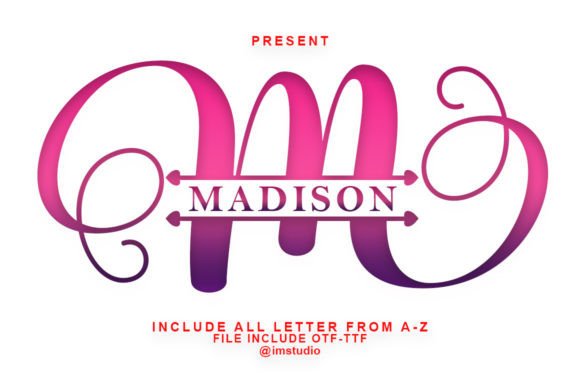
Madison: A Monogram Font That Brings Delicate Elegance
When you first see the Madison typeface, you might find yourself pausing to appreciate its sheer charm. It isn’t just another script; it is a carefully crafted piece of modern typography that balances a handwritten aesthetic with the precision required for professional design. If you are looking for a creative font that feels personal, intimate, and sophisticated, Madison is the kind of design asset that can transform a standard project into something memorable. It captures a specific mood—romantic, gentle, and undeniably stylish—without falling into the trap of being overly decorative or difficult to read.
The core appeal of Madison lies in its versatility as a decorative font. While it shines brightest when used for monograms and logos, its utility extends far beyond simple initials. As a display font, it commands attention on wedding invitations, boutique packaging, and social media headers. The letterforms feature soft curves and a natural flow, mimicking the fluidity of hand-lettering while maintaining the consistency you expect from a premium font. Unlike heavy, blocky typefaces that scream for attention, Madison uses a quieter voice. It draws the eye through elegance rather than volume, making it a favorite for projects that require a touch of class.
Visual Characteristics and Personality
Understanding the visual weight of Madison is key to using it effectively. It is best described as a dainty and beautiful decorative font. The strokes vary in thickness, creating a dynamic rhythm that mimics the pressure of a calligrapher’s pen. This variation gives the letters life and movement. However, unlike some script fonts that can feel chaotic, Madison maintains a structured baseline and clear letter separation. This ensures that words remain legible even at smaller sizes, a crucial factor when selecting a typeface for branding or editorial design.
The personality of this typeface is distinctly feminine and refined. It evokes a sense of luxury that is accessible rather than pretentious. Think of the difference between a stuffy, high-end fashion house and a charming, independent boutique; Madison fits the latter perfectly. It feels warm and inviting. This makes it an excellent choice for entrepreneurs and small business owners who want to build a brand identity that feels approachable yet professional. The font conveys care and attention to detail, suggesting to the audience that the creator values quality and aesthetics.
Strategic Applications in Branding and Marketing
For designers and brand strategists, choosing a typeface is about more than just looks; it is about psychology. How does the font make the audience feel? Madison influences brand perception by establishing an immediate emotional connection. When used in logo design, it signals that a brand is creative, detail-oriented, and passionate about presentation. This is particularly effective in industries such as beauty, lifestyle, wedding planning, and artisanal goods. A logo set in Madison tells a story before a customer even reads the accompanying text.
Beyond the logo, consistency is vital for brand recognition. You should consider how Madison works across different mediums. On packaging design, the font can add a tactile quality, making the physical product feel more personal and "made with love." Imagine a candle label or a box of handmade chocolates; the dainty strokes of the font complement the sensory experience of the product. In the digital realm, Madison is highly effective for social media graphics. In a fast-scrolling environment, a beautiful, distinct typeface stops the thumb. It can be used to highlight quotes, announce sales, or simply add a watermark that reinforces your visual identity.
Editorial design is another area where this typeface excels. Publishers and bloggers can use Madison for pull quotes, chapter headings, or magazine covers. It breaks up the monotony of standard body text (usually set in a sans serif font or a standard serif font) and adds a moment of visual rest and beauty for the reader. It creates a visual hierarchy that guides the reader's eye, emphasizing the most important parts of the content.
Practical Guidance for Designers and Creators
Integrating a new font into your workflow requires a bit of strategy. You cannot simply drop a script font into a document and expect it to work everywhere. Here is how to get the most out of Madison in your next project.
Evaluating Project Fit
Before you commit, ask yourself if the tone matches the message. Madison is a decorative font, which means it is best suited for short bursts of text—headlines, titles, logos, and callouts. It is generally not suitable for long paragraphs or body copy, as the eye tires quickly when reading complex scripts in large blocks. If your project requires a formal, corporate, or highly technical tone, a clean sans serif font might be a better primary choice, with Madison serving as an accent. However, if the goal is to convey warmth, creativity, or romance, this font is a perfect match.
Mastering Font Pairing
The secret to making a script font look professional is pairing it with the right companion. Because Madison is ornate and flowing, it needs a partner that is simple and grounded. A high-contrast pairing often works best. Try combining Madison with a clean, geometric sans serif font for a modern, trendy look. The simplicity of the sans serif allows the details of Madison to pop without overwhelming the viewer.
Alternatively, you can pair it with a classic serif font. This creates a more traditional, editorial aesthetic that feels timeless. The key is to avoid pairing it with other decorative fonts. If you put two complex scripts together, they will fight for attention, resulting in a cluttered and confusing design. Let Madison be the star of the show, and use your secondary font to provide structure and readability for the supporting information.
Technical Considerations
When working with a premium font like Madison, pay attention to the specific styles included in the package. Many high-quality fonts come with alternate characters, ligatures (special connections between letters), and stylistic sets. These features allow you to customize the look of the text. For instance, you might swap out a standard "t" for a more elaborate version to make a specific word look better. Take the time to explore these options in your design software; they are what separate amateur typography from professional type design.
Readability is paramount. Always test your text at the actual size it will be viewed. If you are designing a website, check it on mobile devices. If you are designing a physical product, print out a sample. Ensure that the letter spacing (tracking) is adequate so the letters don't collide in a way that makes them unreadable. While Madison is designed to be legible, improper spacing can ruin even the best typeface.
Licensing and Usage
Finally, as a professional, you must respect the commercial font licensing. If you are using Madison for a client project, a product for sale, or a business marketing campaign, ensure you have the correct commercial license. This is a non-negotiable aspect of professional design work. It supports the type designers who create these tools and protects you and your clients from legal issues down the road.
Why Madison Stands Out
In a market saturated with generic fonts, Madison offers a distinct personality. It allows designers, crafters, and entrepreneurs to infuse their work with a human touch. It bridges the gap between the digital and the organic, offering the polish of digital typography with the soul of hand-lettering. Whether you are designing a wedding invitation, building a brand identity for a new bakery, or creating engaging social media content, Madison provides the tools to do so with grace.
It is more than just a collection of vector paths; it is a design asset that helps you communicate your values visually. By choosing a font that emphasizes beauty and attention to detail, you are telling your audience that you care about the same things they do. Fall for its ravishing style, experiment with its potential, and use it to create designs that don't just look good, but feel right.