Penelope: Weaving Victorian Lace into Modern Design
The Essence of Penelope: More Than Just a Font
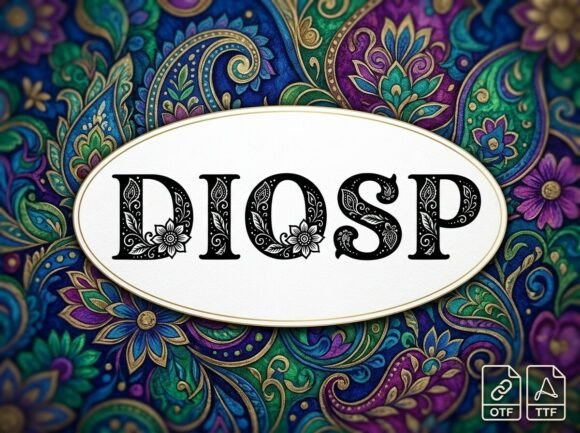
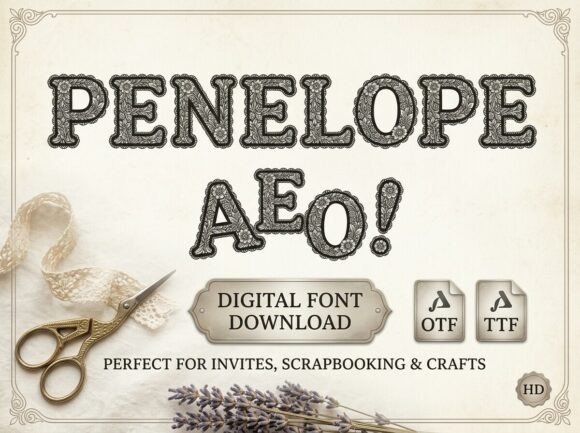
When you first encounter Penelope, you're not just seeing letters on a screen—you're witnessing a piece of digital craftsmanship that pays homage to the intricate artistry of Victorian lace. This premium display font doesn't simply present characters; it weaves them into ornate tapestries of floral patterns and scalloped edges. Each letterform tells a story of elegance, making Penelope far more than another typeface in your design toolkit.
What sets this serif font apart is its dual nature. The underlying structure remains bold and classic, ensuring your message doesn't get lost in decorative details. Yet the surface decoration—those delicate floral fills and rhythmic lace borders—transforms ordinary text into visual heirlooms. It's this balance between readability and artistry that makes Penelope particularly valuable for designers who want to evoke nostalgia without sacrificing clarity.
Where Penelope Truly Shines: Practical Applications
Let's be honest: not every project needs Victorian lace. But when the moment calls for it, few creative fonts deliver like Penelope. Consider these real-world scenarios where this typeface becomes an invaluable design asset:
- Wedding Stationery: Beyond simple invitations, Penelope elevates entire suites—menu cards, programs, thank-you notes—creating cohesive visual storytelling that couples remember.
- Artisan Branding: For cottage-core bakeries, vintage apothecaries, or handmade jewelry lines, this font becomes part of the brand's soul, communicating craftsmanship before customers even read the words.
- Editorial Design: Fashion magazines, lifestyle blogs, and recipe books benefit from Penelope's ability to frame content with sophistication, particularly for drop caps or chapter headings.
- Social Media Headers: In the endless scroll, Penelope stops thumbs. Its intricate details create visual texture that stands apart from minimalist competitors.
I recently worked with a small-batch perfumer who used Penelope for their product labels and Instagram stories. The font didn't just display their fragrance names—it communicated the handcrafted, vintage-inspired essence of their brand identity before customers even smelled the perfume. That's the power of choosing the right creative font.
Understanding Penelope's Personality in Your Projects
Every typeface carries emotional weight, and Penelope whispers of afternoon teas, handwritten letters, and grandmother's heirloom linens. This isn't a font for corporate tech startups or aggressive marketing campaigns. Its personality suits brands and projects that value tradition, craftsmanship, and timeless elegance over modern minimalism.
When evaluating whether Penelope fits your project, ask yourself: Does my audience appreciate vintage aesthetics? Am I selling a feeling as much as a product? Is my visual language more "heirloom" than "cutting-edge"? If you answered yes to these questions, you've likely found a perfect match.
Font Pairing Strategies
Penelope demands thoughtful companions. Pairing it with a clean sans serif font creates beautiful contrast—let Penelope handle headlines while a simple grotesque font manages body text. For projects wanting full vintage immersion, consider a complementary script font, but use this combination sparingly to avoid visual clutter.
In practice, I often recommend testing Penelope with neutral typefaces first. Create mockups of your actual content, not just "The quick brown fox" pangrams. See how the ornate details interact with your specific words and layout. Sometimes a single letter's decorative element might clash with adjacent characters—this is where careful kerning and manual adjustments become necessary.
Readability in Real Contexts
Let's address the elephant in the room: decorative fonts can sacrifice readability. Penelope handles this better than many display fonts because its core letterforms remain sturdy. However, at small sizes or in lengthy paragraphs, those intricate details become visual noise. Reserve Penelope for moments where impact matters more than easy scanning—think logos, short headings, or pull quotes rather than body copy.
Test your designs at actual viewing distances and sizes. A wedding invitation viewed at arm's length reads differently than a website header on a mobile screen. Consider creating multiple versions if your project spans both print and digital media—what works for a 300dpi print might feel overwhelming on a 72dpi screen.
Licensing and Commercial Use
Before incorporating Penelope into client work or commercial products, understand the licensing terms. Most premium fonts offer different licenses for personal versus commercial use, with variations for web fonts, app embedding, and merchandise. For small business owners, this matters significantly—using a font beyond its license can lead to legal headaches down the road.
I always recommend designers keep a licensing spreadsheet tracking which fonts they've used in which projects and under what terms. When a client asks for their brand files two years later, you'll want to know exactly what permissions you have.
Beyond the Basics: Advanced Implementation
Once you've decided Penelope fits your project, consider these nuanced approaches:
- Layering Techniques: Use Penelope as a base layer with semi-transparent textures or subtle shadow effects to enhance its dimensional quality without overwhelming the design.
- Color Psychology: Traditional Victorian palettes—dusty rose, sage green, antique gold—complement Penelope's aesthetic, but don't be afraid to experiment with contemporary color schemes that make the vintage details feel fresh.
- Scale Awareness: At large sizes, Penelope's details become features; at medium sizes, they become texture; at small sizes, they become potential problems. Design with scale in mind from the beginning.
- Whitespace Strategy: Give Penelope room to breathe. Crowding ornate typography diminishes its impact and makes layouts feel claustrophobic rather than elegant.
Remember that Penelope represents one voice in your typographic chorus. A complete brand identity or publication design uses multiple typefaces in conversation with each other. Penelope might be your star soloist, but it needs supporting players to create a full visual symphony.
The Lasting Value of Thoughtful Typography
In our rush toward modern typography and minimalist trends, fonts like Penelope remind us that decoration has its place. Not every design needs to be stripped to its bare essentials. Sometimes, the intricate details—those floral fills and scalloped edges—communicate values that simple geometry cannot.
For designers, entrepreneurs, and creators willing to embrace this aesthetic, Penelope offers more than just pretty letters. It offers a way to weave heritage, craftsmanship, and timeless grace into contemporary projects. And in a digital landscape crowded with generic templates and recycled ideas, that kind of authentic visual storytelling might be your most valuable design asset of all.